The biggest reason anti-snoring products fail isn't that they don't work — it's that people stop using them. Mouthguards get left in the drawer. Strips peel off. Machines feel like overkill for a snore. Comfort is everything, because the only product that helps is the one you'll actually use every night.
That's the lens for this page. Instead of a generic "amazing benefits" list, here's the honest version: each real SnoreStop benefit, and the reason it matters in real life — plus where it has limits.
The short story: nearly every SnoreStop benefit traces back to one idea — make snoring relief comfortable and simple enough to keep up. Device-free, natural, a couple of sprays at bedtime. Below, I break down each benefit so you can see exactly what you're getting.
One honest reminder before we start: these benefits apply to simple, non-apneic snoring only. SnoreStop does nothing for sleep apnea, it's homeopathic (so results vary and claims aren't FDA-evaluated), and if you have apnea warning signs you should see a doctor first. Keep that in mind and the benefits below land exactly as described.
SnoreStop is a natural, homeopathic formula designed for nightly use and is non-habit-forming, so it can become a normal part of a bedtime routine without dependence. For people who want to avoid heavier interventions for simple snoring, that "gentle and natural" profile is a genuine draw — used as directed, with the usual sensible cautions for alcohol content and specific groups.
🌿 The Reason: homeopathic, plant-and-mineral-based, non-habit-forming.
🌙 The Benefit: fits a regular nightly routine for ongoing simple snoring, used as directed.
⚠️ The Limit: it's homeopathic (claims aren't FDA-evaluated); contains alcohol; not for children, and pregnancy/nursing needs a doctor's okay.
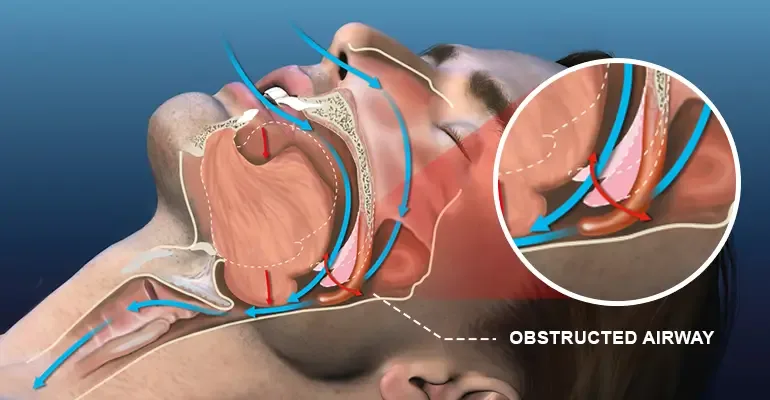
Most snoring fixes ask you to wear something uncomfortable all night — a guard that shifts your jaw, strips that tug your nose, tape that forces mouth-breathing shut. Many people simply can't tolerate them. SnoreStop's benefit is removing that barrier entirely: a couple of sprays and you sleep normally. For anyone who's quit a mouthguard out of discomfort, that's the deciding benefit.
🛏️ The Reason: nothing worn during sleep — just a bedtime spray.
😴 The Benefit: a realistic option for people who can't or won't use devices.
⚠️ The Limit: a fitted device may work better for certain mechanical snoring — comfort vs mechanism.
Snoring is a two-person problem — the partner often loses more sleep than the snorer. By aiming to reduce simple snoring, SnoreStop's real-world benefit is shared: fewer elbow nudges, fewer migrations to the couch, and the chance to sleep in the same room again. For many couples, the point isn't a perfectly silent night — it's a noticeably calmer one.
❤️ The Reason: less snoring means less sleep disruption for the person beside you.
🛌 The Benefit: calmer shared nights — fewer nudges, fewer separate bedrooms.
⚠️ The Limit: results vary; it may reduce rather than eliminate snoring, and it's not for apnea.
A small spray bottle goes where a CPAP machine or a box of devices can't. SnoreStop is discreet enough to keep on the nightstand and small enough to drop in a travel bag, so your routine doesn't break on trips, in hotels, or at a partner's place. The benefit is consistency anywhere — no setup, no charging, no bulk.
🧳 The Reason: a compact spray bottle, no equipment.
✈️ The Benefit: keep your routine on trips and away from home — discreet and portable.
⚠️ The Limit: check liquid/travel rules; discard the bottle per the label after opening (commonly ~6 months).

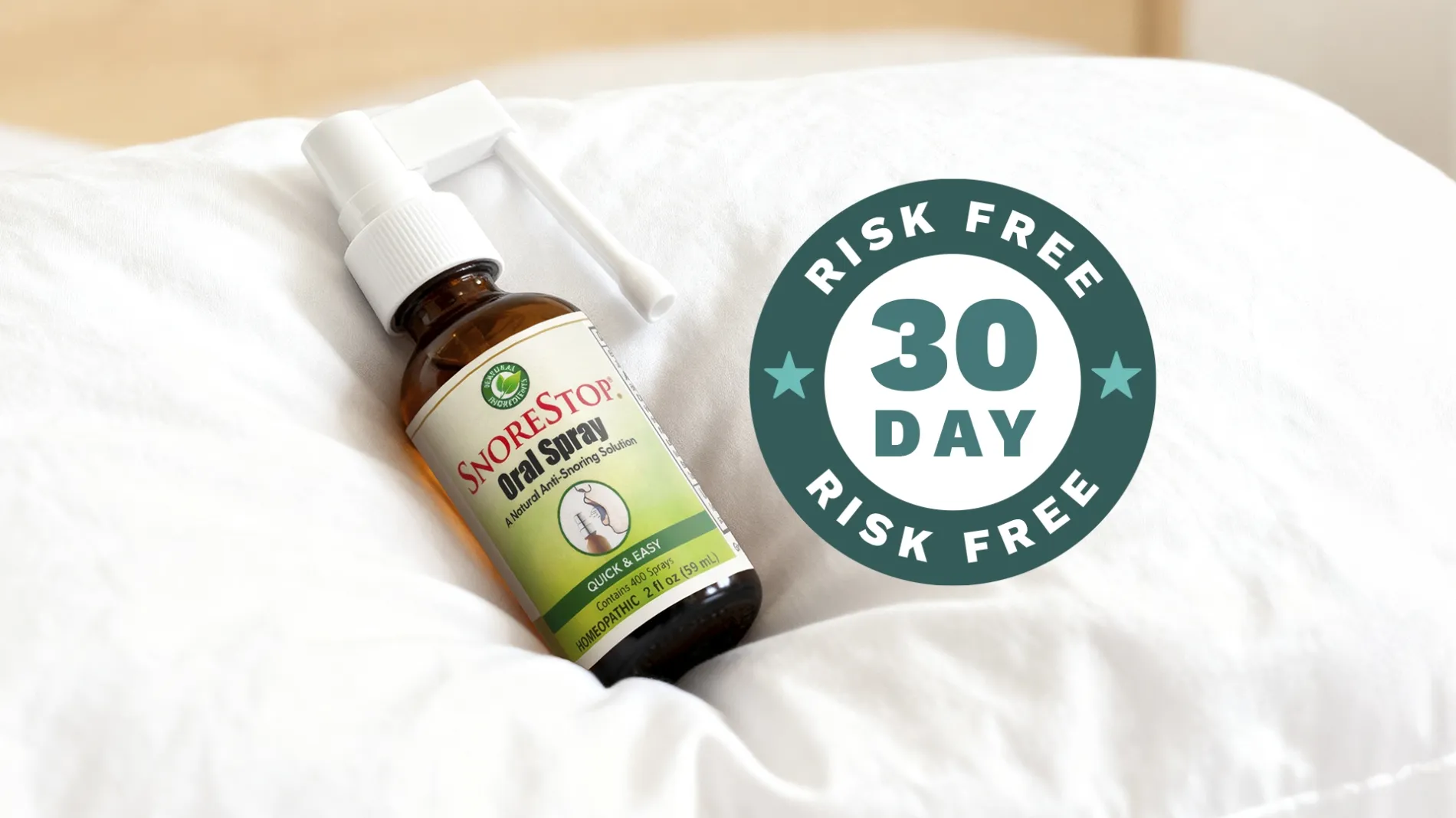
Two things lower the risk: a long track record and a guarantee. SnoreStop has been on the US market since 1995, and it's offered with a satisfaction/money-back guarantee, so you can give it a fair few nights and get a refund if it isn't for you. For a comfortable, non-apneic snoring option, that combination makes trying it genuinely low-stakes.
🛡️ The Reason: on the market since 1995 + a money-back guarantee.
✅ The Benefit: try it on your own snoring, low-risk, and return it if it doesn't help.
⚠️ The Catch: buy from the official offer to get the genuine product and the guarantee; confirm terms first.

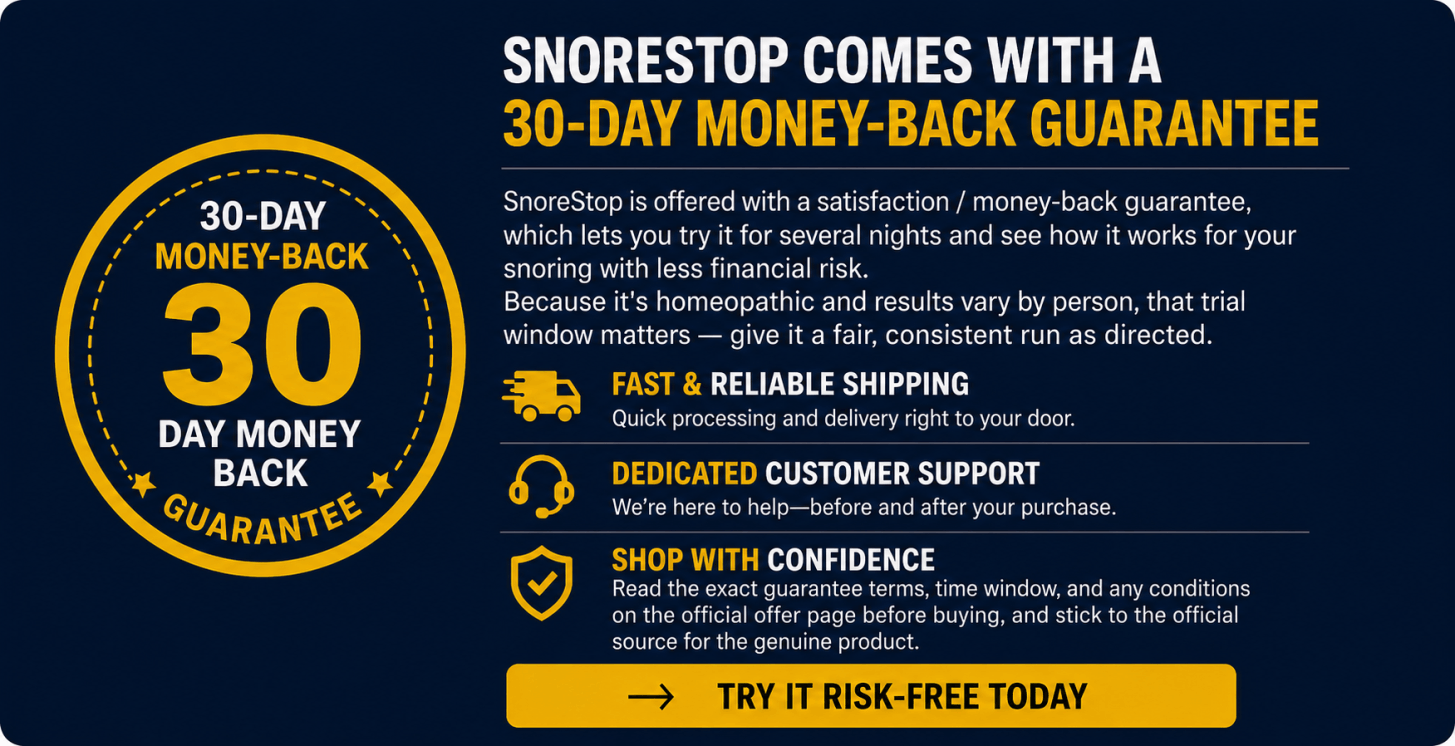
If you decide to try it, here's how to give it the fairest shot:
🌙 Be Consistent — use it every night for several consecutive nights (commonly 3–7) before judging; results often build up.
🚫 No Water After — use it as the last thing before bed and skip drinking right after, per the label.
🍷 Stack the Basics — simple snoring also responds to side-sleeping, limiting alcohol before bed, staying hydrated, and managing weight; the spray works best alongside these.
🩺 Rule Out Apnea First — if there's any doubt about whether your snoring is the simple kind, get checked before relying on any spray.
📅 Mind the Shelf Life — discard the bottle per the label after opening (commonly ~6 months).
🛒 Buy Official — protects the guarantee and ensures you get the genuine product.
A fair, consistent trial alongside basic sleep habits = the best version of what this spray can do.
❓ What's the single biggest benefit of SnoreStop?
Comfort and consistency. Because there's no device to wear, it's the kind of routine people actually keep up — and with snoring products, the one you use nightly is the one that helps.
❓ Will it benefit my partner's sleep too?
That's often the real goal. If it reduces your simple snoring, your partner usually benefits most — fewer disruptions and calmer shared nights. Results vary, and it may reduce rather than eliminate snoring.
❓ Is the natural/homeopathic angle an actual benefit?
For people who prefer a gentle, non-habit-forming option for simple snoring, yes. Just keep it honest: homeopathy is debated and these claims aren't FDA-evaluated, so treat it as a comfortable thing to try, not a proven cure.
❓ Can I benefit from it while traveling?
Yes — a compact spray bottle is easy to take along, so your routine doesn't break on trips. Check liquid travel rules and the bottle's shelf life after opening.
❓ Will I benefit if I have sleep apnea?
No. SnoreStop is for simple, non-apneic snoring only and does nothing for apnea. If you have apnea signs, see a doctor — that's the path that actually helps.
No. SnoreStop is designed only for simple, non-apneic snoring and does not treat, cure, or prevent sleep apnea. If you have loud snoring with gasping, choking, breathing pauses, or daytime exhaustion, see a doctor — those can be signs of sleep apnea, which needs medical care.
Results vary. Some people notice a difference quickly, but most are advised to use it consistently for several consecutive nights (commonly 3–7) before judging. Stop use and ask a doctor if symptoms don't improve within 7 days.
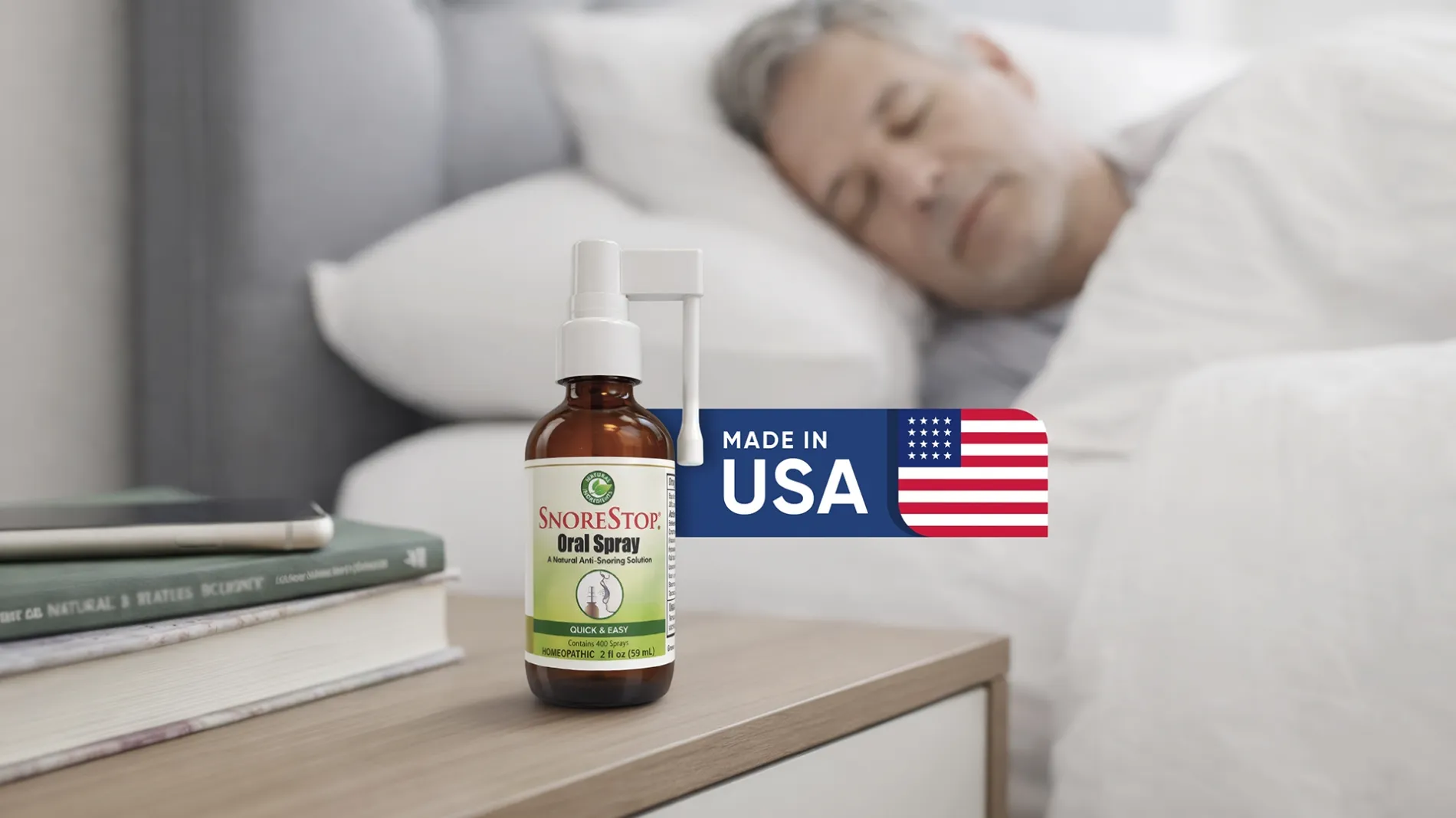
It's a homeopathic, non-habit-forming formula made in an FDA-regulated facility and used on the US market since 1995. It contains alcohol, and if you're pregnant, nursing, take medication, or have allergies, ask your doctor first. It's not for young children (see the label's age limit). Use only as directed.
No homeopathic product is "FDA approved." SnoreStop is made in an FDA-regulated/GMP facility, but homeopathic claims have not been evaluated by the FDA for safety or efficacy, and the FDA is not aware of scientific evidence supporting homeopathy. We want you to have the accurate picture.
Shake the bottle, then at bedtime spray under the tongue and into the back of the throat (per your label). Don't take it with water. Give it several nights for a fair trial.
Explore More: Home · Full Review · About the Reviewer · Order Tracking · Contact
melinda@snorestop.com
+1 (805) 388-0600